
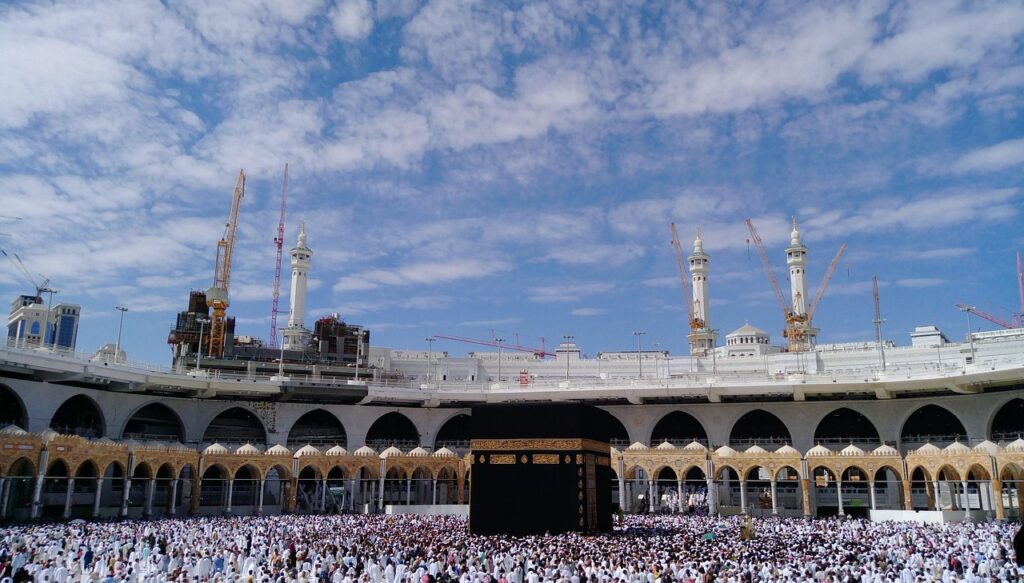
The Five Pillars of Islam are the foundation of every Muslim’s faith and daily life. They guide believers in worship, charity, self-discipline, and complete devotion to Allah. These five essential acts of worship strengthen a Muslim’s relationship with the Creator and serve as the framework for living according to Islamic teachings. Among these pillars, Hajj holds a unique place because it brings together faith, sacrifice, unity, patience, and submission to Allah in one remarkable journey. In this article, we will explore the Five Pillars of Islam and the role of Hajj, helping Muslims in Canada better understand its spiritual significance and the importance of fulfilling this sacred obligation.
If you would like to learn more about the foundations of Islam before exploring the Five Pillars, read our guide on Basic Islamic Education: Islam Meaning to strengthen your understanding of Islamic beliefs and teachings.
What are the Five Pillars of Islam?
In the Islamic faith, there are five duties or rituals that every Muslim is expected to observe to be considered among the most devout worshippers of Allah. The five pillars of Islam in order are shahadah, prayer, zakat, fasting, and Hajj.
Shahadah
Shahadah is the first pillar of Islam and the declaration that there is no god but Allah, and Prophet Muhammad ﷺ is His Messenger. It is the foundation of a Muslim’s faith and commitment to Islam.
Salah
Salah is the second pillar of Islam and is performed five times a day. It strengthens a Muslim’s connection with Allah and encourages discipline, gratitude, and remembrance of Him.
Zakat
Zakat is the third pillar of Islam and requires eligible Muslims to give a portion of their wealth to those in need. It promotes generosity, compassion, and social justice.
Sawm
Sawm is the fourth pillar of Islam and is observed during the month of Ramadan. Fasting teaches patience, self-discipline, gratitude, and devotion to Allah.
Hajj (Pilgrimage)
Hajj is the fifth pillar of Islam and is obligatory once in a lifetime for Muslims who are physically and financially able. It represents unity, equality, sacrifice, and complete submission to Allah.
Allah Almighty says:
“Pilgrimage to the House is a duty owed to Allah by all people who are able to undertake it.” (Surah Aal Imran 3:97)
The Five Pillars of Islam have remained unchanged since they were established in Islam. Hajj is obligatory once in a lifetime for every Muslim who is physically and financially able to perform it. Those who perform Hajj more than once do so voluntarily as an act of additional worship.
Muslims who are to live a life most like that of Prophet Muhammad are expected to complete the five pillars of Islam and participate in the faith rituals as much as possible.
If you are from Canada, get your Hajj visa from an authentic travel agency.
Hajj is a pillar of Islam.
Hajj is one of the five pillars of Islam. For this pilgrimage, pilgrims from all over the world go to Mecca. The steps of the hajj pilgrims strengthen the pilgrim’s faith and devotion. To perform this ritual, pilgrims must wear ihram, which symbolizes holiness. Ihram demonstrates that all pilgrims are equal in the sight of the Almighty. It also shows the unity in the Muslim ummah.
The last month of the Islamic calendar, the month of Hajj, has come. From 8 to 12 Dhul-Hijjah, Muslims perform the rituals of Hajj. It is a journey of spiritual renewal for every Muslim, and every Muslim wishes to perform Hajj once in their lifetime.
“And proclaim the pilgrimage to the people. They will come to you on foot and on every lean camel, coming from every distant pass.” (Surah Al Hajj 22:27)
Hajj is followed by the festival of Eid al-Adha, which is the time of Qurbani (festival of sacrifice). The ritual of sacrifice dates back to the great sacrifice that Prophet Ibrahim was prepared to make in devotion to Allah (SWT). The spirit of all the above-discussed obligations is submission and sacrifice.
The Reality of Hajj
If we consider religion in the light of the Qur’an, the fact becomes clear that the main purpose of religion is self-purification. There are four aspects of Nafs. One aspect is the animal existence of Nafs, the other aspect is rational existence, the third is spiritual existence, and the fourth aspect is its moral existence. This worship of Hajj is a means of purification of one’s spiritual being.
To further reflect on the Hereafter and strengthen your understanding of the Day of Judgment, you can also read our guide on the meaning of Surah Al Waqiah Meaning, which explains the powerful lessons and spiritual message of this remarkable Surah.
Significance of Hajj
Hajj is a combination of all these acts of worship. It has accumulated the basic principles of all acts of worship. The Kaaba is the center of our prayers. It is the first mosque built for this purpose.
In the Qur’an, Allah Almighty says, “I settled Ibrahim and his descendants in Makkah to keep my house clean for those who circumambulate, stay, and bow.” For Hajj, the same house is intended. The purpose of prayer is stated in the Qur’an as ‘remembrance of Allah,’ and Tawaf is a form of prayer that is performed only in the presence of the Kaaba.
Whatever a person spends in arranging Hajj and its aftermath is a satisfaction of the same spirit, but the common man can afford to meet the expenses of Hajj only by reducing his daily expenses.
In that sense, it is possible to have an even greater sense of generosity. The purpose of fasting is to cultivate piety. It is the worship of moving towards Allah, giving up worldly desires, and attaching oneself to Allah.
Hajj fulfils this purpose perfectly. The man arranges the expenses of Hajj by stopping his needs and leaving his affairs and area and setting out for the house of Allah. In the same way, the worship of Hijrah and Jihad is the name of the spirit of getting out of the life of disobedience and becoming active in the way of God. Even in Hajj, a person leaves home for the sake of his Lord, and during the days of Hajj, like a Mujahid, he sometimes goes through the stages of the encampment and sometimes travels and endures the difficulties that occur in them.
Conclusion
The divine foundation of a Muslim’s life is the five pillars of Islam. Faith shows Muslims’ devotion towards the Almighty One. The best way to connect with the creator is through prayer. Through zaakaat, we as a community can maintain justice and equality.
Fasting stops us from evil and promotes a healthy routine. Hajj is the best example of sacrifice, discipline, unity, and submission to Allah. In all of the five pillars, Hajj beautifully reflects the values of the Five Pillars of Islam by promoting unity, sacrifice, patience, and complete submission to Allah. It promotes brotherhood, patience, and the desire that the desires of this world are not everlasting.